Showing posts with label shimokitazawa. Show all posts

Nakamuraya @ WeST PArK CaFE (Ramen and Burger), Shimokitazawa

East Meets West

This has to be one of the weirdest combination of food I've seen in a while: Ramens and Burgers served in the same establishment. Then again, if these were served in a random restaurant, I'd be VERY suspicious about the outcome, but we're talking about a famous Ramen joint "Nakamuraya" and an expat favorite West Coast style restaurant "WeST PArK CaFE" collaborating, so it got my taste buds rather excited.
By the way, you should know that the owner of "Nakamuraya" (famous for its salt-based broth), Shigetoshi Nakamura, has spent some time in the US as a teenager and also opened in 2009 a Ramen joint in Los Angeles called "Ramen California". It should therefore come as no surprise if he has been interested in mixing genres and cultures again.

The stylish shop opened beginning of January and I can't say it's been drawing crowds yet. Does it need more word-of-mouth or is it just potential customers being dubious about the combination of cuisine served there? I'm not sure yet. All I can say is that the burger I ordered was pretty good, so chances are the bowl of Ramen is worth it too. But that'll be for another occasion.

Stylish interior
There are two chefs in the kitchen: one seems to be in charge of the Burger menu and the other one looks at the Ramen noodles. Though I've been to WeST PArk CaFE countless times, I've never tried their burgers, so I decided to have the former cook get to work by ordering the Bacon Cheese Burger. (For your information, every burger comes with some fries)

The Bacon Cheese Burger

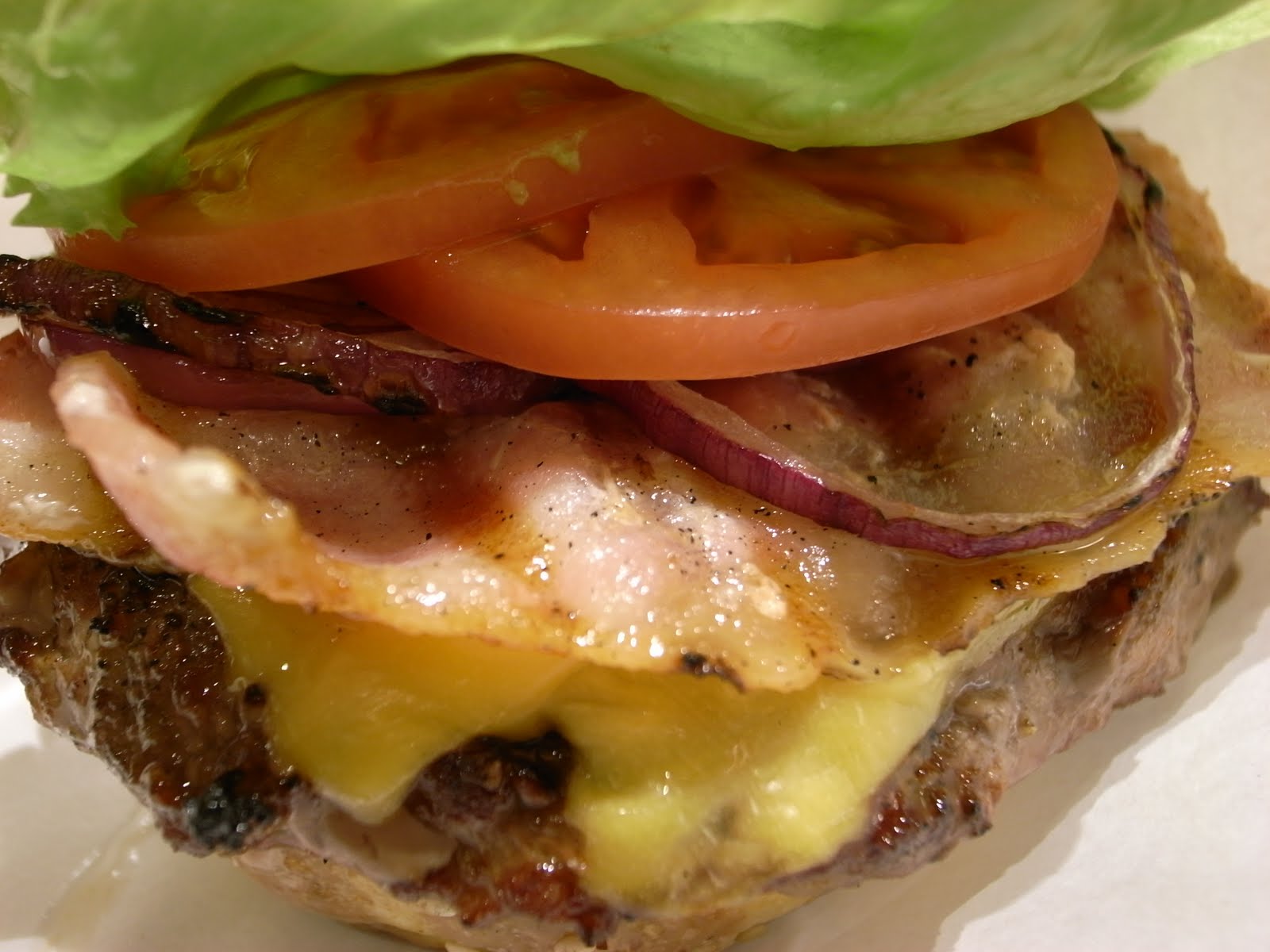
In about ten minutes came a rather tall burger with a promising look. The pictures don't do the burger justice in terms of size and color, but I can guarantee you that from the fresh tomatoes, lettuce and grilled onions to the juice-dripping beef pate and melted cheddar cheese, everything was pretty mouth-watering. The white sesame-topped buns are quickly toasted over the grill and (if I remember well) a hint sweet. Good bread. As far as I know, WeST PArk CaFE bakes its own bread so I would assume the bread here is homemade as well.

The buns soaked in meat juice

The charcoal-grilled pate is made of 100% Australian beef and there are no eggs, bread crumbs neither onion mixed in the meat : just plain meat so you can appreciate its taste. The beef was good and juicy, seasoned with salt and pepper only. There was a little bit of mayo-like sauce on top of the lettuce, but that's the only seasoning I could find besides what I mentioned. If you're the type of person who likes his/her burger simple with as little sauce as possible, this place should suit your taste.

The long and sweet French fries

There were not a lot of French fries on the side, but the few ones on the plate were thick and a good 4 to 5 inches in length. They tasted a little bit like Japanese sweet potatoes, so it was slightly surprising at the beginning. Good nonetheless.

The Bacon Cheese Burger costs ¥1,400 so it's not the cheapest burger around but it was a satisfying dish, both size-wise and taste-wise. Will try to review the famous Ramen next time!
In the meantime, Bon Appetit!

Nakamuraya @ WeST PArK CaFE is open everyday from 11:30am to 23:00pm (L.O. 22:00pm)
03-3410-1120
Setagaya-ku, Daizawa 5-32-13
Click here for a MAP

Shimokita Chaen Ooyama (Green tea room), Shimokitazawa

Did you know that the hectic Shimokitazawa and the surrounding area was covered with tea plantations until only about a century ago? As incredible as it is, Shimokitazawa seems to have been a moderate player in tea production (for the Edo market) until the completion of the Tokaido railway made the transportation of better and more renowned tea from Uji (near Kyoto) easier at the end of the 19th century.

Today's post is about the green tea room "Shimokita Chaen Ooyama", which is far from being your average tea room: the two resident tea "sommeliers" both rank at 10 dan (a dan is a Japanese rank system used in martial arts and fine arts) which is to my limited knowledge, the highest level you can attain in the art of judging teas. For your reference, there are only four 10 dan "sommeliers" in Japan and two of them (they're brothers by the way) work in this place...
The ground floor is a tea shop, from where sometimes comes a pungent smell of roasted green tea, and they have a "tea room" on the second floor which gets flooded in the summer with customers wanting to cool out on the house-specialty Maccha (green powdered tea) or Hojicha (roasted green tea) flavored shaved ice. The tea room, which you think might look traditional, is actually rather plain looking, making the incredible display of dozens of golden trophies won at tea contests sort of odd.

Until we get to try their famed shaved ice next summer, my wife and I settled for their Maccha Zenzai. A winter favorite dish "Zenzai" is a warm and sweetened red bean soup topped with boiled or grilled Mochi rice cake.

Flavorful Hoji-Cha

We were first offered a cup of very rich in flavor Hoji-Cha, which we slowly enjoyed before being brought the main dish. You will be amazed by the inspiring roast aroma of this tea.

The Maccha Zenzai at this tea-room consists of said red bean soup, a small quantity of thinly watered Maccha and some salty snack Ume-Kombu (salty plum flavored kelp)

The pretty Maccha Zenzai

The red bean soup is surprisingly low in sugar, allowing a better tasting of the delicately cooked Azuki beans. Zenzai sometimes comes in an almost puree form, but here at OoyamaChaen, the beans are simmered to perfection, thus letting you easily pick each bean with your chopsticks and really enjoy their texture and taste. The grilled mochi cakes are how you expect them to be: crunchy on the outside and glutinous inside.

The watered Maccha is served as a topping, so you can change the taste of your soup to your liking. The almost neon-like vibrant green and the dark azuki red combines perfectly, so the visual result of the topping is also worth it. Maccha essentially being just powered green tea (thus quite biter at times), I thought adding it on top of the dish would pretty much alter the taste of the dessert, but it happened to blend really nicely. Slightly surprised by this outcome, I tasted the green liquid separately with the tip of my fingers: the maccha in this tea room is very delicate in taste, leaving only a subtle bitter aroma of green tea in your mouth.

Beautiful green

Japan has an interesting custom of mixing sweet and salty, from adding salt on watermelon to eating sweet rice cake covered with a pickled sakura leaf (Sakura-Mochi), and the Zenzai dish is the perfect example: you will find a lot of places offering you the Konbu salty snack with the sweet soup and Ooyama-Chaen is one of them.

Their really good Ume-Kombu is covered with a very delicate Ume (dried salty plum) powder, but you may find the kelp a little "difficult" to eat if you're not used to it. It is a little bit of an acquired taste, and some people have a problem with its 磯の香り (Iso no kaori, literally "Smell of the ocea"). I strongly suggest you try theirs though, as it's a great one.

They also served us during the course of the meal a cup of nice green tea Guri-Cha (“Guricha or Guri-tea” is named from its shape similar to “guri” which represents the pattern of elaborately-coated red lacquer ware, or the whirlpool-like arabesque design. The official name of the product is steamed rounded green tea. (taken from this website)), so the slightly high price of ¥800 for the whole thing is to my opinion pretty much justified (I am not sure they always serve those different cups of tea though).

Be sure to always check their website as the menu changes according to the season (the Zenzai is served until the end of February so hurry up!) and they are often closed due to tea-harvesting. Looks like everyone is gone the whole months of April and May!!!
The caracter 休 means "off" so now you know how to look at their calendar.

Shimokitazawa Chaen is closed on Mondays, harvesting seasons and national holidays (make sure to check their website!)
Setagaya-ku, Kitazawa2-30-2 2F
03-3466-5588
Click here for a MAP

Dashin Soan (Soba), Shimokitazawa

the charming entrance

Finally some time to add a new entry!

This new post in a while features Dashin-Soan, an establishment serving a typically Japanese item: the cold "Soba" (noodles made of buckwheat flour) . But not your average soba you'll find for ¥300 at cheap eateries in stations or chains... The "superior" quality one.

the "waiting" space with the garden in the back

To be honest, I don't care that much about sobas as I am much more of an Udon guy (thicker noodles made of regular wheat flour), but I definitely like this place. I haven't been there a lot as it is a little out of the way (a good 15mn walk from the station), but the traditional decor and garden around the restaurant creates a soothing Japanesque ambiance and the noodles have been excellent every time we've visited the place. Not to mention the Shinganji temple right across the street with its giant gingko tree and a locally very popular shrine, the Kitazawa Hachimangu a block away, so the post-lunch/dinner promenade is worth it.
Dashin Soan is very popular, so you might have to wait a little bit before being seated, but the wait is on a bench outside by the garden, so it's not stressful at all.

everything is nice and classy

We waited about 10mn before being welcomed in the elegant restaurant: everything from the furniture to the dishes is chosen with taste.

In order to fully enjoy the noodles' flavor, my wife and I both ordered their recommended Akisoba (Autumn Soba) noodles, freshly boiled then washed and chilled in cold water, and eaten dipped in a cold dark brown Tsuyu broth (a mix of dashi, mirin and shoyu).
Akisoba designates the Sobas made of buckwheat planted between early June and mid-September and harvested between late August and late December.
Dashin Soan's noodles are totally homemade, from shelling and grounding the wheat, to making the dough and thinly slicing it into fresh noodles.

the supersized noodles

The noodles come in a large plate with two holes in the middle (that you don't see on the picture) that act as drainers for the excess water. Freshly grounded Wasabi and thinly-cut Negi (Spring onion) are served on the side for your liking. Japanese usually add both in the broth.

The grey noodles are square, about 2mm in width and a hint brown because of the tiny bits of grounded buckwheat shell mixed in the flour. The Koshi (firmness) is quite strong and the bite al dente. We ordered the supersize, which did not seem to be a lot at first but it's actually filling: you'll see... just don't slurp and swallow. Chew and savor those, and you'll find yourself really full. Plus, that will let you fully enjoy the taste of the buckwheat, slightly reminiscent of the wonderful aroma of a rustic Pain De Campagne country bread.

the freshly boiled and then cold water chilled noodles

At ¥1,300, it is not a very cheap lunch, but everything from the decor to the noodles is upscale, and you should thoroughly enjoy the experience.

Last but not the least, if you want to eat the noodles the real Japanese way, you should order one or two little entrees to munch on with some nice sake and finish your nice meal with a plate of noodles.

Dashin Soan is closed on Tuesdays, open the rest of the weekdays from 11:30am to 15:00pm and 17:30pm to 21:30pm; from 11:30am to 21:30pm on weekends and notional holidays
03-5431-0141
3-7-14 Daizawa, Setagaya-Ku
Click here for a MAP

Gyoza Senmonten Genbu (Gyoza/Noodles), Shimokitazawa

Chinese dumpling "Gyoza"s are often side dishes in Japan. People order them in Chinese joint as part of a bigger menu, paired with Ramen noodles or Chahan (Fried rice) for example, and rarely as a solo item. The trend has recently changed though, and restaurants specialized in Gyozas have lately increased. Gyoza Senmonten Genbu (Specialized Gyoza restaurant "Genbu") which opened in the summer of 2007 is one of them, and though seemingly going through high and lows in terms of occupancy, has established itself as a moderate player within the Shimokitazawa food business.

If you're wondering what Japanese-style fried Gyoza are, please click this wiki article on the dish. Should you want to skip on it, you just need to know that it's ground meat (most of the time pork) mixed with finely chopped vegetables (generally garlic, chinese cabbage and Nira garlic chives) wrapped and sealed in thin dough before being fried. I have also talked a little bit about the history of the dumpling in Japan and the not-so famous reason why Japanese added garlic in the Chinese recipe, in this post.

Genbu doesn't really look like a normal "Chinese" restaurants: most of the apparent infrastructures are in metal (even the stools are what seem like kegs with a cushion on top) and a big tv monitor near the kitchen plays MTVish R&B music, therefore giving the place a rather cluby look, uncommon in this neighborhood. However, don't let that modern western feel deceive you on the food quality: they do serve very decent dumplings and (less memorable) noodles.

I went for the house-speciality "TonToro Gyoza", which adds some gourmet pork cheek meat in its regular pate. The cheek is supposed to be one of the most tender part in the animal and butchers can only get a little amount from each pig so it is a "limited" menu, slightly more expensive than the more standard dumplings they also offer.

The gyozas were very well fried, the dough being nicely crunchy (but not hard) and golden-brown on one side whereas the other "rawer" faces offered more doughy resistance. Some bad places will sometimes offer you fried dumplings that have the same texture all around and that can be such a turn-off... The ground meat felt very tender indeed and the first bite freed a bit of some nice juice from the sealed dumpling. The amount of garlic felt just fine and balanced and the overall taste pleasant. The shop takes pride in recommending you to eat its Gyoza with lemon juice, salt and paper, and not with the orthodox soy-sauce/vinegar/chili oil mix, so you can enjoy the taste of the meat better. I can definitely recommend you to follow their advice. Good stuff.

A plate of Gyoza not being enough to fill my belly, I also ordered a Nira Ramen (Ramen topped with chopped Nira garlic chives), a dish that I have learned to appreciate at the excellent Chinese restaurant "Fuumin" in Omotesando. The waiter warned me that it is a hot and spicy noodle dish, but I ignored his tip and still went with it as the one I was used to in Fuumin is a delicate one based on a low-salt bouillon.
Well, stupid me: it was hot! Not the unbearable hot, but still enough to cleanse your system the next day...If you don't like hot, don't even think about trying this. The soup was so red-hot with Rayu (Chinese style chili-infused vegetable oil) and thus so chili spicy that I couldn't really tell what the broth was based on. There was a moderate topping of what I thought to be a mix of pork ground meat with a sesame oil based sauce, that smoothed the taste when mixed with the soup, but it still was not enough to clear the hotness.
The noodles used were interesting as they had the very characteristically firm texture, almost the color, the size and the taste (not too sure about the taste as it was lost in the chili aroma) of the noodles used in the Korean-style cold Reimen noodles. It is rather rare to have these used in hot noodles recipe so that's worth the experience.

At ¥500 the beer, ¥450 the Gyoza and ¥750 the noodle dish, this simple dinner amounted to ¥1,700, which is affordable. Their beer is nice and cool, so if you feel like munching on heaps of Gyozas while downing some draught beer, Genbu is definitely an affordable option. The waiters are polite and very professional.

By the way, it's next door to the uber-famous old-school Chinese eatery "Mintei".
And if you're into J-Pop, it's worth noting that the restaurant is owned by someone very close to the multi-platinum selling duo "Kobukuro". Who knows, they might come one day for a plate of Gyoza?

Genbu is open everyday from 11:30am to 04:00am
03-3481-5655
Setagaya-ku, Kitazawa 2-8-8
Click here for a MAP

Chabuzen (Soup Curry), Shimokitazawa

I have recently started this weird thing of shooting manhole cover and feature them in a photoblog. It's nothing new; there are plenty of incredible blogs about those covers, if not even art books about them. I am not sure why I started this, but I just love the designs (obviously) and there is in finding new designs a ludic aspect to it that is quite exciting for the geek in me. The past few years I have spent looking around and up for unusual or pretty things to immortalize with my camera, now I am constantly looking down.

Anyway, looking for new round iron treasures, I was walking on the north side of Shimokitazawa when I came across a Soup Curry restaurant in the middle of almost nowhere. It was noon, hot and I was hungry so I entered the tiny place to discover an almost funnily small counter with three seats, and two little Chabudai (traditional short-legged table) in the back. The owner wearing a traditional brown outfit looked almost surprised when I got in, making me a hint worried that I was the only customer in days. It's also worth noting that I was the only customer during the whole lunch so it's still fair to say that it's not the most happening joint in Shimokitazawa... But my worries were vain as the food he offered me was good.

I ordered the Tappuri Yasai No Soup Kare (soup curry with "bunch" of vegies) and since I had to order how hot I wanted my dish (like Magic Spice but without the tripy names), I went for the house-recommended hotness "ChabuKara".

While waiting for my curry, I had time to chat with the owner, from which I recall 1) he opened the shop a couple of years ago 2) he chose that place because it's far from the station, enabling him to keep menu prices low as the rent is cheaper 3) he loves soup curries and has even spent some time in Sapporo, the "soup curry world capital", to study and improve his own recipe 4) he's originally from Hiroshima and on and on and on...

Just like Magic Spice, this eatery's specialty is definitely more like a hot Pot-Au-Feu (chicken bouillon with vegetables) than a regular curry. The SUPER low-on-salt clear soup looked like it'd been given a lot of care and attention. Little or almost no fat was floating on the transparent liquid and though the place is supposed to be a Yakuzen Soup Curry joint, the bouillon didn't taste (at least to me) like the pungent Kampo spices I usually assimilate to be Yakuzen-style. Yakuzen is a cuisine based on traditional Chinese medecine and this article might help you clarify things a little bit if you have no idea what I'm talking about.
One thing the soup did taste like (and increasingly as I was getting towards the end) is the south-east asian fish sauce Nam Pla. When I asked him whether there was fish sauce in it, the reply was positive.

The house-recommended hotness, which I think was third from the smoothest, was within reasonable for me, but probably too hot for anyone with chili issues.

The restaurant's webpage says the curry contains an impressive 14 vegetables, which I'd love to descrive to you, but most of them were so stewed and had lost so much of their original look, that it makes the listing almost impossible. I'm not a total debutant in food but I'm afraid I could name you only few ingredients so I'll leave it all up to you to try it and find out for yourself! One thing for sure is that numerous different textures were present, from slightly crunchy to melting, so it did not feel like a whole messy puree. One of the non-vegetable very interesting item was the Okara No Gnocchi, literally gnocchis made out of Okara, a substance left when soybeans have been pressed to make soy milk (which in turn is used to make Tofu and Tonyu). I have talked about this uber-healthy product in this doughnut shop post as well. It had the look of mochi (glutinous rice cake) but was mealier inside. A weird texture to be honest, and definitely not a bomb of flavor either but it was a new discovery for sure.

The rice plate I was served was full of flavorful Hatsuga Genmai (germinated brown rice) which is even richer in nutrient factor than the already pretty healthy regular brown rice, due to the work of the enzymes present during germination. I felt the slightly bigger grains went very well with the very liquid soup.

It's out of the way at a good 15mn walk from the station, but the owner/cook is quite funky, the tiny shop is kind of cute and the meal is at a very affordable ¥600, so if you're feeling slightly adventurous and want to try something off the tourist trail, do walk the extra few hundred meters to visit this place.

Chabuzen is closed on Mondays and open the rest of the week (including national holidays) from noon to 15:30pm and 17:30pm to 23:00pm (L.O. at 22:30pm)
Setagaya-ku, Daita 6-16-20
080-6603-8587 (that's a cell phone number so the phone bill will be slightly more expensive than a fixed line call...)
Click here for a MAP

Ramen Yajirushi (Ramen), Shimokitazawa

There are a few spots quite tough to find or get to in Shimokitazawa, like the infamously hard to spot "Frisco" (which unfortunately closed last week as the old building it was in will be destroyed), and this Ramen joint "Yajirushi" that I am featuring today is one of them. I am not sure how long it's been there but I have NEVER noticed it.
True, I've seen its red flag saying らーめん (Ramen) on the side of the street probably a good several hundred times, but never seeing the actual joint close-by (or at least at the end of the alley where the flag is) made me not pay attention to the place at all.
Just as a search result not on your Google top page is unfortunately almost irrelevant, a restaurant which is not close by its billboard or sign has a chance of remaining largely unnoticed. Or, like "Nasu Oyaji" which is slightly away from the main street, opt for a fun sign such as "we are 64 steps from this sign" and you know that some people will end up in front of your shop just for the sake of trying the little challenge.
Alright, enough digressing.

Ramen Yajirushi (Yajirushi means "arrow", and I must have completely missed it...) occupies one of the ground floor rooms (furthest from the street) of a really average looking apartment, and can probably sit 10 people at the counter. The owner/cook is mute as a fish and I had to wonder whether the meal ticket distributor at the entrance was another way for him to avoid communicating with customers.

There were few press clippings outside the restaurant recommending the Shio Ramen (salty Ramen) so that's what ordered with a topping of Moyashi (soy sprout) and an Aji-Tama (simmered egg).
The said bowl of noodles got to me in less than five minutes and I have to say that the initial tasting of the transparent soup was a pleasant surprise. The broth is a simmered blend of Genkotsu (the succulent pork knee joint bone which resembles the human knuckle, thus dubbed the equivalent in Japanese), Torigara (Chicken carcass), vegetables, Niboshi (dry baby sardines) as well as Sababushi (dry mackerel shavings), and manages to keep a delicious balance between the meat and fish aromas (the later is stronger). I would not recommend that you down it though, as there was a relatively consequent amount of fat floating on top the soup, capable of boosting your calorie intake for the day before you know it.

The homemade white-colored square noodles are about 1.5mm thick and have a nice firmness. A sign on the counter says that the dough contains some alkaline water, which explains the consistency, as such water is usually added to give the noodles a harder bite. I loved it, as they somehow had a hint of jelly texture to them.

The toppings were all good with a special mention for the very tender and melting in your mouth Chashu (Chinese style pork bbq), once again homemade, stewed six hours before being marinated in a special Shoyu-based glaze for an hour.
I also loved the perfectly simmered egg, which unfortunately I would have preferred more half-boiled. Mine was tasting perfectly but was 90% boiled when I love them runnier.

Don't go to this place thinking you'll be able to practice your Japanese as you will most probably end up not exchanging a single word with the cook (not that he seemed like a bad guy). However, I can recommend the Shio-Ramen. The place seems famous for its Tsukemen (dipping noodles in a separate bowl of hot broth) as well, so please give it a try if you feel like it.

Ramen Yajirushi is closed on Tuesdays and open the rest of the week from 11:30am to 21:00pm
Setagaya-Ku, Kitazawa 2-28-7
03-3468-1538
Click here for a MAP

Pannya (Curry), Shimokitazawa

I am not sure whether it's the horrendous humidity that makes me crave for spices, but I have found myself going to curry joints a lot lately. Our latest currying spree brought us to Pannya, a specialized curry restaurant which opened a year and a half ago, ten minutes or so from the station. The owner is well-known actor Takashi Matsuo, a notorious curry fan.

The shop is a clean, small twelve-seater with movies and theater posters on the white walls.
We got there around nine in the evening and the place was full, so it does seem to be quite popular.
Though the menu said that one should try their specialty Chicken Curry, I opted for the "Tokubetsu Na KatsuKare" (the "very special" curry with topped deep-fried pork cutlet) which I ordered from the charming smily little lady in the kitchen. For your reference, I have featured another Katsu-Kare in this post about the old-school Yoshoku eatery "Kitchen Nankai".

It took her ten minutes or so to cook three other curries on wait and ours so that's really not bad of a performance.
As you can see from the picture, the plate is quite large and the light-colored curry relatively soupy. This is one of the characteristic of this place: the recipe doesn't include any flour which is usually rather common in Japanese curries and gives it its thickness. The curry in itself is rather low in salt (so does the cutlet), not too spicy (would prefer it with more spices) and full of stewed onion. There is a strong emphasis on cardamom flavor so if you don't like that specific spice, you will probably not like this dish.

The very tender rice is a blend of regular white rice and whole grain one and its very boiled texture combines very well with the soup, the grains almost sucking the juice.

The pork comes from Nakasei, a specialized aged-meat shop located in the very chic and residential area Denen-Chofu, which might explain why this curry costs a whopping ¥1,500 when the Chicken one is charged ¥800. The "expensive"meat is almost pink, so if you're the worrying kind when it comes to how your pork is cooked, you might get a little concerned here. However, given the tight hygiene standard put by the Japanese government, I wouldn't be too paranoid about this; I guess you can always ask to have your meat well-done (Telling the cook "Katsuretsu O Yoku Yaite Kudasai" will probably do) if you want to.
Though slightly too low on salt, I found the thin-breaded meat tender and delicious, greatly pairing with the curry sauce.

Once again, I found the whole dish to lack spices and therefore characteristics (or maybe that is the characteristic) , but it was definitely tasting good so I'll go back. Next time I guess I will try their Keema and Chicken half and half curry: our neighbor was eating it and it did look quite good.

Pannya is closed on Mondays and open the rest of the week from 11:30am to 16:00pm and 17:00pm to 22:00pm (L.O.)
03-3485-4548
Setagaya-Ku, Kitazawa 3-23-23
Click here for a MAP

Hara Donuts (Doughnuts), Shimokitazawa

The cute little doughnut shop with its white walls

Today's feature is not about a restaurant but about a doughnut shop that has become a must visit while in Shimokitazawa (locals come here a lot as well). Things have definitely slowed down a little bit, but when they opened over a year ago, people were lining up like crazy: definitely a better time to try their specialty now. By the way, this is a chain with 13 shops as of today, so you don't necessarily need to try it here. However, they are right across my favorite espresso joint "Bear Pond Espresso", so if you want something to munch on with your coffee, you can always buy some doughnuts at the shop and bring them in the cafe.

I am sure doughnuts ask for no explanations for you, but it's always nice to have a little glimpse at the ever-educational wiki articles (where you can learn among other things that Canada has the most doughnuts stores per capita), so here it is for you. By the way, have you ever wondered why some people starting to make doughnuts in a ring shape? (the not so mind-blowing answer at the end of the post!)

The red-tinted Tomato doughnut

Hara Donuts (spelt like that) started a couple of years ago in the town of Kobe (near Osaka), when someone had the great idea of combining in the batter some of that great Tofu (soy milk cheese) by-product Okara (the substance left when soybeans are pressed to make soy milk) and Tonyu (soy milk) from the Hara Tofu Shop in business since 1968 in that same town.

The doughnuts here are quite dry (at least more than the Krispy Kreme's Original Glaze ones, for example) and you may feel like you would need a drink to finish one, but you will quickly realize that the initial dryness quickly disappears to give way to a nice chew and taste. I am not sure how the Okara affects the texture, but the doughnuts here feel interestingly more and more "doughy" as you chew. Also, though they look oily, they don't really feel that way in your mouth.

The Satokibi doughnut

The Okara added in the batter is full of vitamins and minerals, so if you don't eat three at a time, it is quite safe to say that they're "healthy". They have several different tastes, from which I would recommend the Satokibi (regular doughnut sprinkled with sugar-cane powdered sugar) and Tomato (doughnut which batter is mixed with fresh tomato).

The slightly pinkish, red Tomato Doughnut

The "Satokibi" ones are sweetened just perfectly and may go extremely with some fresh milk or some nice coffee. The "Tomato" are stranger in the way that they don't taste that much like tomato first, but as you keep on chewing, you can feel the nice aroma of the fruit getting stronger and stronger. And it actually tastes pretty good so definitely give it a try!

Once again, this did not necessarily have to be on this Shimokitazawa blog, but it has somehow become a little bit of a landmark in the neighborhood, and I find their specialty good, so I posted it!

In case you are still reading, the reason why someone started to make doughnuts in a ring shape is to avoid them being raw in the center...


Hara Donuts is open everyday from 10am to 19:00pm though they'll close when they're out of batter
03-6416-8280
Setaga-Ku, Kitazawa 3-27-2
Click here for a MAP

Magic Spice (Soup Curry), Shimokitazawa

I am featuring today probably one of the most famous soup curry restaurant in Tokyo, "Magic Spice". For those of you not familiar with this tasty and spicy dish, let me copy and paste that little paragraph I wrote before in this other soup curry joint "Kokoro" feature post:

The Soup Curry was born in Sapporo, in the Northern Island of Hokkaido, where it's become as popular as the Ramen, with more than 200 restaurants all competing for the best of its genre. The trend has gone southward and you can find Soup Curry restaurant all over Japan now.
This Japanese remix of the Indian curry is exactly like its name describes it, that is a soupy one. Each restaurant takes pride in cooking the perfect bouillon in which they'll add the spices and the ingredients that they will slowly stew, for the perfect soupy curry
.

Bollywood on steroids interior

Magic Spice actually happens to be slightly misunderstood as they're serving more of an Indonesian chicken soup "Soto Ayan" with strong curry flavor rather than a standard soup curry. The mistake by customers is easily understandable though, as the decor inside and outside is of a completely pseudo-Indian psychedelic taste, and even the waitresses dress like they could be working for Air India. The top page of the "English" website is probably the only place with a little bit of Indonesian graphics.

The extravagant look aside, the menu ordering system works a little bit like the "Kokoro" one, meaning you first need to choose the soup dish you want (chicken, pork, beef, seafood, vegi and so forth) and then you ask for how spicy you want it to be. All you need to know is that even the smoothest one is relatively hot, so you shouldn't challenge yourself unless you really can stand it, and the spicier it is the more expensive it is, so it is generally a wise choice to keep it edible at a smooth level.

There are 7 levels of hotness, all named after pseudo-buddhism references, which are (in smoothest +¥60 to hottest order +¥250) :
覚醒 (Kakusei or awakening) > 瞑想 (Meisou or Meditation) > 悶絶 (Monzetsu or Faint in agony) > 涅槃(Nehan or Nirvana) > 極楽(Gokuraku or Heaven) > 天空(Tenkuu or Vault of heaven) >虚空(Kokuu or Void)
There is also an astronomical level of hotness which is not on the menu but which you can ask for, called アクエリアス (Aquarius). You have to sign a waver (I'm serious...) when eating this so do it at your own risks!
Talking about pseudo-buddhism references, you will see that this place is full of weird buddhist and hindi graphics, very strange texts all over the place (from your table to the walls) about how eating curry and enjoying strong spices will make you trip etc...

I ordered the "World's best, tender and juicy" Chicken leg soup curry, and cautiously went for Meditation (Level 2) to start with.

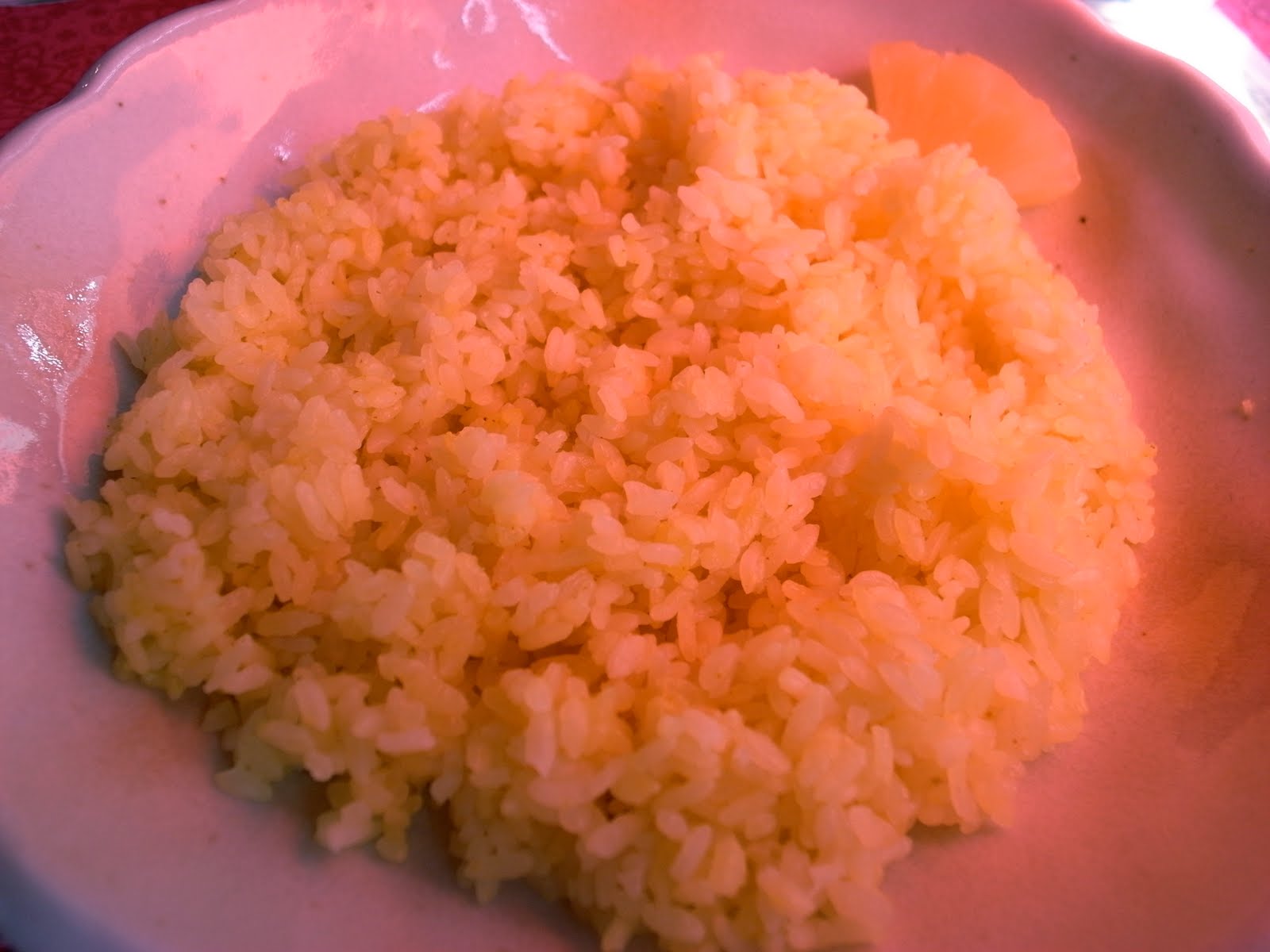
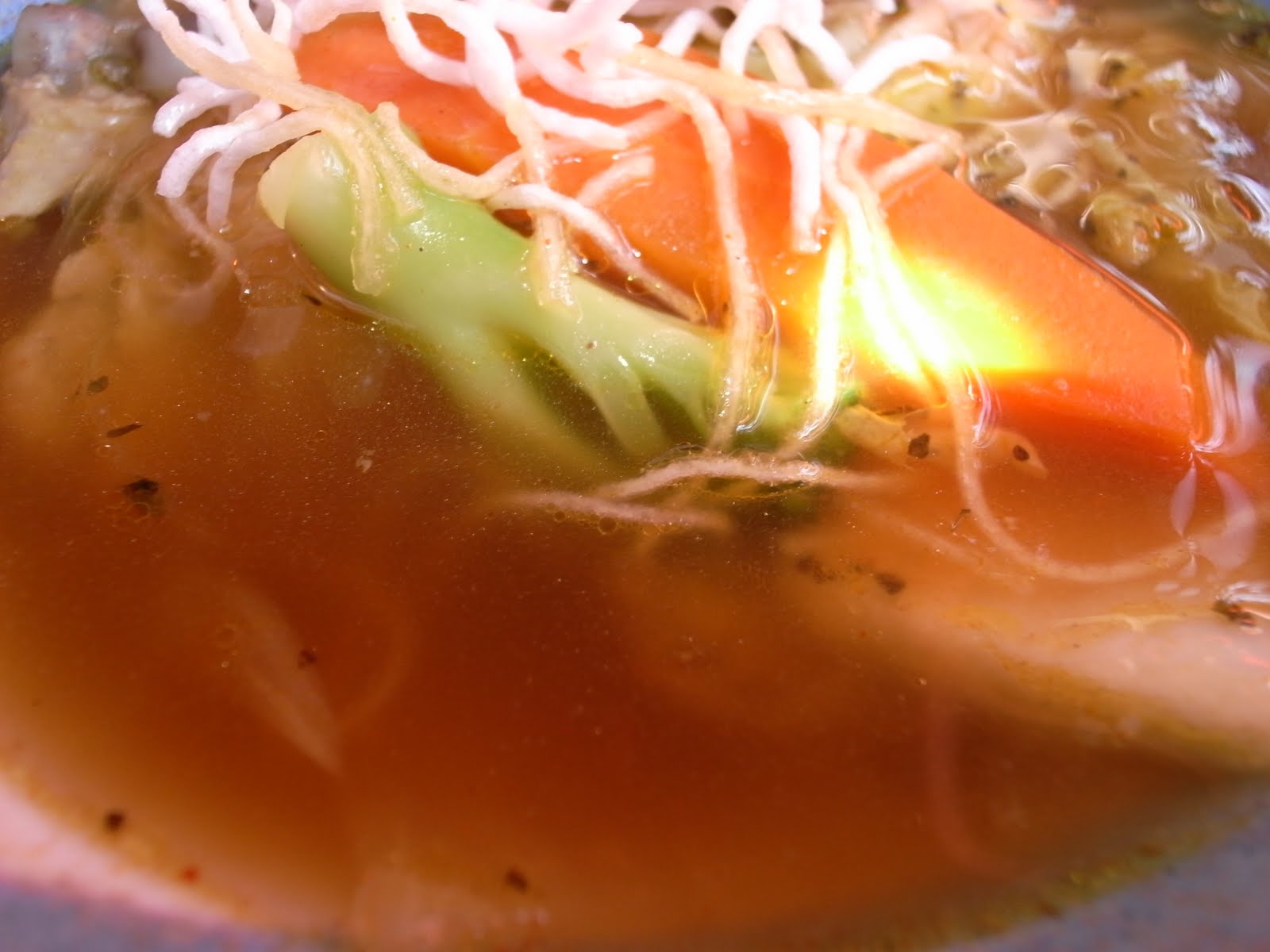
After 10 minutes came a plate of safran rice (with a slice of pineapple) and a pretty big soup with a big chicken leg in it. The other ingredients were some cut carrots, Daikon radish, cauliflowers, onions and chinese cabbage.

Chicken curry and a ray of light

As I told you before, the soup curry here tastes more like a soup with curry flavor. To be more precise, it tastes like a good Pot-Au-Feu, that is a stewed bouillon of chicken and vegetables, with some added "indian" spices like garam masala and some more pepper. The first spoon is surprising as although you know you ordered Level 2 hotness, the spice kick is rather impressive. That's where the safran rice comes in timely and handy as it helps you escape from the peppery feeling.

The mouth-saving safran rice

In case you'd like to smooth or spice-up your soup, there are some red-hot chili powder, some galam masara like yellow curry powder and a transparent liquid made of lemon, lime juice diluted in water. I tried the citrus water which does wonder in smoothing the broth.

Chili powder, curry powder and the magic water

The chicken is well stewed and you really don't need to work hard on it to detach the tasty flesh from the bone. I also prefer the skin roasted than boiled, but it is cooked here long enough to feel unobnoxious. The size of the specimen is quite big so if you're a chicken eater, that one leg should be enough to please you.

As you can see, it looks more like a Pot-au-feu than a curry...

Once again, this is not what I would call a soup curry, but Magic Spice is very very popular in its own right (you will probably have to wait before getting to a table), so should you be curious about the decor, the various mystical levels of hotness and the reason why its cuisine is so famous, please give it a try yourself!

Magic Spice is closed on Tuesdays and Wednesdays, open from 11:30am to 15:00pm and 17:30pm to 23:00pm the rest of the weekdays, and from 11:30am to 23:00pm on weekends and national holidays
03-5454-8801
Setagaya-ku, Kitazawa 1-40-15
Click here for a MAP

Marusan Foods (Japanese style cafe/restaurant), Shimokitazawa

Today's feature is one of those "I've lost track because there are too many of them" funky eateries of cool Shimokitazawa. Marusan Foods (the restaurant logo is a circle or "Maru" with number 3 inside or "San", hence the name) serves lunch, acts like a cafe in the afternoon, and from what I heard provides aficionados with good and healthy dinner fares in the evening.
the several jars of fruits marinating in vinegar

I climbed up the stairs to the third floor, got there at noon sharp for the opening and there was no customer around until I was finished, so lucky me for the relaxing lunching experience. The only problem was that their A/C wasn't working, so on a 35C heat day, that may explain why I was the only fool sweating in there.
The music playing was a series of Walter Wanderlay-ish loungy keyboard music so the heat and the music made for an out-of-place Copacabana atmosphere.

The food is far from being Brazilian though, if not for the green and yellow color of their specialty dish Omu-Raisu (stirred rice stuffed omelette), reminiscent of the Brazilian flag.
Yes, you heard me right: their Omu-Raisu is green and yellow, when it should be and has always been yellow and red, that is the color of the omelette and the ketchup-based sauce on top. This is the first time I have EVER seen such anomaly and I believe Marusan is the only place in Japan which serves a green Omu-Raisu.

Jako-Sansho-Gohan Omu-Raisu

The green sauce is actually a green peas sauce that is flavorful enough to remind me of those peas potages they serve in French cuisine. Very good stuff, but it unfortunately blends so well with the rest of the dish that you don't really feel the peas at all.

The quickly sauteed rice beneath the excellent and runny omelette is very low on salt, mixed with fried Jako (very small dried baby sardines) and very aromatic wholegrain Chinese pepper "Sansho". The bomb of flavor and the numbness to the tongue that this spice brings continues to amaze me. So it's actually maybe without surprise that the peas seem so reserved when the rest of the ingredients are so flavorful.

A Sansho pepper on the left and a white Jako (can you see it? It looks like a long rice grain)

Overall a well-balanced and excellent dish. I still doubt the efficiency in taste of the peas, but the color they bring is WAY WORTH IT!

My ¥890 set came with an excellent and pungent Aka-Dashi Miso Soup (made of regular "Mame-Miso" fermented bean paste and "Kome-Miso" fermented rice and bean paste; you will often come across this soup in Sushi restaurants), some Tsukemono marinated pickles and the delicious grey-brown paste on the above picture which tasted like a Goma-Dofu (Sesame Tofu). If it was indeed what I reckoned it was, then it is a dish consisting of black sesame seeds, water and Kudzu powder. If not for the very little Katsuo-Bushi (dry bonito shavings) that was topped on the paste, it would have been the perfect Buddhist vegan Shojin recipe.

After a satisfying meal (despite the brutal heat), I had to have something refreshing so I chose from one of the many curiosity-enhancing "vinegar-marinated fruits drinks" they offer the "Marinated fig in milk" drink (for an additional ¥300). As you can see from the very top picture of this post, they have a dozen of different fruits marinated in vinegar which you can mix with Soda, Milk, Soy milk or some final liquid I can't remember anymore.
I thought the combination would be too weird, surely undrinkable or at least way too sour, but my mix actually tasted like a very nice slightly sour Fig Lassi (if that can give you an idea). I'm not sure I would drink gulps of it, but I thought it acted as a perfect dessert to finish the overall very satisfying lunch.

I definitely recommend this place for lunch (I haven't tried the dinner yet). The staff is nice, the food is good and affordable, the location is charming; so provided the A/C is back by the time you visit the place, you should thoroughly enjoy it.

Marusan Foods is open everyday from noon to midnight, and until 02am on Saturday nights
Setagaya-ku, Kitazawa 2-8-5, 3F
03-3485-3838
Click here for a MAP

Cicoute (bakery, cafe), Shimokitazawa

I tried to enter this very popular cafe bakery (with glowing reviews on the net) a couple of times before, but in vain as people were lining-up on both occasions and I very much dislike queuing for food. However, since I was in a bread mood the other day, I took "Socialnomics" (which by the way my friends at Orinoco just translated in Japanese) with me just in case, and got to the joint at 11:50, that is ten minutes before opening.
I thought the line would be as terrible as a Non-Docomo phone in Fuji Rock but only six people were waiting when I got there, and thus managed to get in as soon as the shop opened. I got assigned a little table with a Pixar-like lamp at the end of the cafe.

The interior is rather dark, making it slightly unsuitable for reading (unless you get the table I got), and tastily undecorated with not much but white walls and wood furniture. The background music was a Blossom Dairie album playing so it gives you an idea on the airy and "classy" atmosphere of the cafe. Let's say another typical Shimokitazawa relaxing shop.

Since it was my first time eating there, I asked for the recommendation which was the Cicoute Set, with a wholewheat muffin toasted with cheese and ham, a cup of ceylon tea and a serving of cold Ratatouille (stewed vegetables). In case you're not a ham&cheese person, they also have a honey&butter on plain muffin, and if the stewed vegies are not your cup of tea (if I may say), then you can choose a Japanese style "Salade Nicoise" (fresh salad with canned tuna).

The toasted rye muffin was slightly crunchy on the outside and quite doughy on the inside. The grain's aroma is quite strong, the bread quite sweet and it makes for a delicious treat. Like a good old pain de campagne, you can see some unbaked flour on top which gives that nice and crafty touch to the muffin.

The ham and melted cheese are both not too salty, allowing you to really enjoy the combination of the ingredients with the bread. There is an obvious taste of pepper which I like, but you might want to let them know in advance if you don't like that condiment.

My mother being from south of France, I tend to be pretty tough on mediocre Ratatouille, but this cold one is good, though lacking in tomato sauce (but that's just one different way of cooking the dish, I guess). The ingredients (eggplants, onions, celeries and pumpkins) are well stewed, tender and really melting in your mouth. A refreshing pleasure in this brutal heat. A special mention to the stewed pumpkins which feel almost pasty when below your palate.

The ceylon tea was very fragrant and good but I would have loved a little more of it, as it only comes in one cup. Which brings me to the major issue facing this bakery: the above set comes at a whooping ¥1,360...so unless you're loaded, this is not going to be your lunch canteen.

True, this place is charming, relaxing, miles away from the lethal heat, offering good food made with what looks like a lot of care, but you have to be ready to pay the price, which I might be though only few times a year... But that's your choice. And remember, if you're not there before opening, you will have to wait...

Chicoute is closed on Wednesdays and open the rest of the week from noon to 21:00pm
Setagaya-ku, Daita 5-1-20 (5mn or so from Shimokitazawa's station West Exit)
03-3421-3330
Click here for a MAP